Mastering Autonomous Cleaning Compliance in Australian Transport Hubs
For Australian transport hubs, ensuring autonomous cleaning compliance is non-negotiable. This guide explores the critical regulations, operational benefits, and how next-generation robots are delivering consistent, verifiable hygiene, from Brisbane to the Gold Coast.
Australia's transport hubs operate under immense pressure: millions of passengers, round-the-clock operations, and a non-negotiable mandate for immaculate hygiene and safety. The stakes for cleaning compliance have never been higher.
As these critical infrastructures embrace automation, facility managers face a dual challenge: optimising efficiency while rigorously adhering to Australian workplace safety and operational standards. Enter autonomous cleaning compliance Australia – the framework that ensures efficiency doesn't come at the cost of safety or accountability.
Maintaining a pristine environment in high-traffic areas, like the bustling terminals of Brisbane Airport or the extensive rail networks serving the Gold Coast, demands more than just labour-intensive efforts. It requires smart, verifiable solutions that uphold the highest standards, consistently.
Key Takeaways
- Australian transport hubs leverage autonomous cleaning to meet 24/7 demand, addressing labour challenges with consistent hygiene.
- Compliance with the Work Health and Safety Act 2011 (Cth) and international standards like EN IEC 63327 is crucial for safe, auditable operations.
- Robotec provides Gausium autonomous cleaning robots nationwide, with flexible Purchase, Lease, and RaaS options, supported by expert guidance on compliance and implementation.
The Unyielding Demand for 24/7 Cleanliness
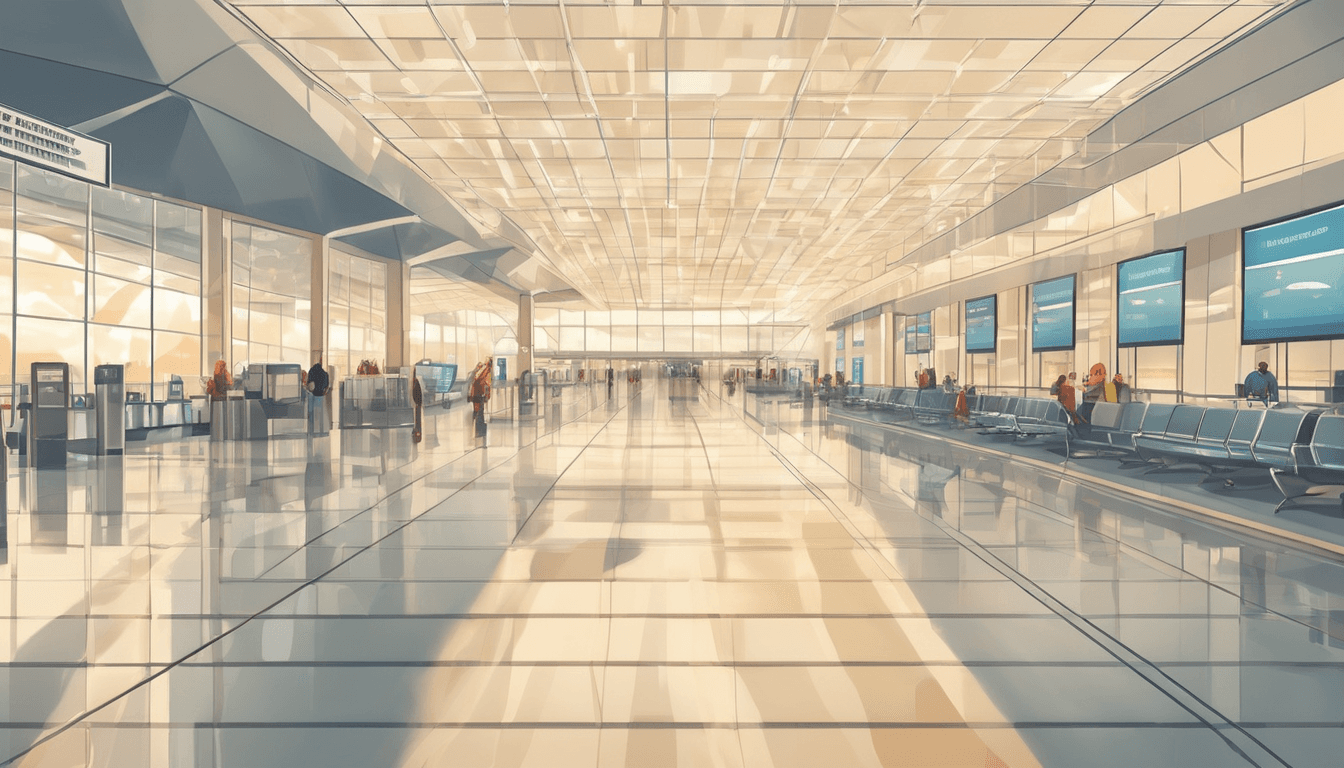
Imagine the sheer scale: vast expanses of hard flooring in an airport concourse, the constant churn of foot traffic through a train station, or the meticulous maintenance required in an intermodal freight facility. Manual cleaning crews, while dedicated, struggle to maintain peak standards amidst such relentless operational tempo. Labour availability challenges, coupled with the need for continuous cleaning without disrupting public access, create significant bottlenecks.
This isn't just about aesthetics; it's about public health, passenger experience, and operational continuity. A lapse in cleanliness in these environments can quickly escalate from an inconvenience to a health risk, impacting reputation and potentially causing disruptions. The traditional cleaning paradigm is simply not equipped for this level of consistent, around-the-clock performance.
Automation: The Strategic Shift for Operational Leverage
Forward-thinking facility managers are increasingly turning to autonomous cleaning robots as a strategic answer. These aren't just gadgets; they're precision-engineered operational assets, capable of delivering consistent, high-quality cleaning without the fatigue, inconsistency, or scheduling constraints inherent in manual processes.
The transition isn't merely about replacing a broom with a robot. It's about fundamentally reshaping facility operations. Autonomous platforms free up human staff to focus on more complex, detail-oriented, or customer-facing tasks, elevating the overall service standard while providing a consistent base clean that manual teams simply cannot sustain.
Navigating Autonomous Cleaning Compliance Australia
Deploying autonomous cleaning solutions in Australia's high-traffic facilities requires a robust understanding of local and international compliance benchmarks. This ensures safe operation, protects workers and the public, and provides auditable proof of due diligence.
Work Health and Safety Act 2011 (Cth)
Under the Work Health and Safety (WHS) Act 2011 (Cth), Persons Conducting a Business or Undertaking (PCBUs) have a primary duty to ensure, so far as reasonably practicable, the health and safety of workers and other persons at the workplace. For autonomous cleaning equipment, this means proactive risk assessments. Facility managers must consider potential hazards such as collisions with people or objects, slip risks from wet floors during scrubbing, and electrical safety concerns related to charging infrastructure.
Demonstrating compliance involves robust risk mitigation strategies, comprehensive operator training, clear signage, and detailed incident reporting procedures. It's about proving that every reasonable step has been taken to integrate these sophisticated machines safely into dynamic environments.
EN IEC 63327: The International Standard for Autonomous Cleaning
While not mandated by Australian law, international standards like EN IEC 63327 are increasingly referenced in Australian procurement processes. This standard outlines performance and safety requirements for commercial autonomous floor treatment machines. It covers critical aspects such as obstacle detection, emergency stop functionality, controlled-area operation, and human-aware behaviour. For a premium Gausium-class platform like the Omnie, designed for large hard-floor operations, compliance with such standards signals a commitment to commercial-grade reliability and safety.
Adherence to EN IEC 63327 provides Australian operators with confidence that their autonomous cleaners are engineered to operate safely around people, rather than being confined to restricted industrial zones. This is paramount in public spaces like airports and large shopping centres, where robots must seamlessly integrate with human movement.
Australian Electrical Safety Regulations
Each Australian state and territory has specific electrical safety regulations governing the installation, testing, and ongoing use of electrical equipment in workplaces. Autonomous cleaning machines, their charging docks, and battery systems fall squarely within this scope. Facilities must ensure that all associated electrical components meet local standards, are regularly tested, and are maintained by authorised personnel.
This isn't a set-and-forget task; it's an ongoing commitment to safety, ensuring that the power infrastructure supporting your autonomous fleet remains compliant and hazard-free.
Beyond Compliance: The Operational Imperatives
While compliance forms the bedrock, the true value of autonomous cleaning extends into superior operational performance and verifiable results.
Unmatched Consistency and Coverage
Unlike human operators who may vary in speed or thoroughness, an autonomous cleaner meticulously follows its pre-programmed routes, ensuring no section is missed and every pass is uniform. This is especially vital in large-scale areas where comprehensive coverage is challenging for manual teams. A Gausium Marvel, for example, designed for expansive warehouse floors or large transport hubs, can sweep and scrub simultaneously, providing a consistent, high-quality clean across vast hard-floor areas for extended periods, even overnight.
This unwavering consistency dramatically elevates overall hygiene standards and presents a premium image to patrons and staff alike.
Data, Reporting, and Auditable Cleaning
Modern autonomous cleaning platforms generate invaluable operational data. This includes details on cleaning routes, coverage maps, battery usage, and even obstacle encounters. For facility managers, this data provides auditable proof of cleaning performance, essential for internal quality control and external regulatory reporting. It's a powerful tool for optimising cleaning schedules, proving compliance, and demonstrating Return on Investment (ROI).
Imagine being able to show, with verifiable data, that an entire terminal or distribution centre was cleaned to a specific standard every single night – a level of accountability previously unattainable with manual methods.
A Real-World Scenario: Elevating a Regional Transport Hub
Consider a major regional transport hub in Queensland, managing thousands of daily commuters and freight movements through its facilities. Facing persistent labour shortages and escalating cleaning costs, the facility manager, Maria, recognised the need for a change. Her challenge wasn't just finding cleaners, but finding a solution that could consistently maintain a high standard of cleanliness 24/7 across diverse hard-floor areas – from public waiting zones to maintenance workshops – all while adhering to stringent WHS protocols.
Maria engaged Robotec, an authorised distributor of Gausium automated cleaning robots in Australia, based in Melbourne and supporting sites nationwide through Purchase, Lease, and RaaS. Robotec's team collaborated with Maria to assess the site, identify high-traffic zones, and map out optimal cleaning paths. They recommended deploying a fleet including Gausium Omnie scrubbers for public concourses and perhaps a Beetle dry sweeper-vacuum for specific logistics areas where dry cleaning was preferred.
Crucially, Robotec provided comprehensive documentation and training, ensuring Maria's team understood how the robots operate safely, how to conduct daily checks, and how the system provided reporting for compliance. This included demonstrating how the robots' advanced sensor arrays and emergency stop features aligned with WHS obligations and EN IEC 63327 guidelines.
The result? A consistently cleaner facility, reduced operational costs, and peace of mind knowing that their cleaning operations were not only efficient but also fully compliant with Australian safety standards.
The Future of Facility Cleaning is Automated and Accountable
For Australian facility managers overseeing transport hubs, large retail spaces, or industrial complexes, embracing autonomous cleaning isn't just about modernising; it's about optimising for a future where efficiency, consistency, and verifiable compliance are paramount. The days of simply 'making do' with manual methods are numbered.
As Australia's operational landscapes continue to evolve, the strategic deployment of autonomous cleaning solutions becomes less a luxury and more a necessity. It’s an investment in a cleaner, safer, and more resilient operational future, supported by clear pathways to autonomous cleaning compliance Australia.